
Aug 27th 2026
Modern Accent Furniture: What to Buy First and Why
Every home has a room that almost works. The couch is fine. The rug is fine. And yet something keeps it from feeling finished, usually because nothing in the room was actually chosen on purpose. It just accumulated.
This is the exact problem modern accent furniture for the home tends to solve, not by replacing everything, but by adding the one piece with enough presence to make the rest of the room look intentional by association.
Why One Piece Can Do So Much Work
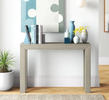
A console table with real proportion, a bench with an actual finish, a nightstand that does more than hold a lamp, these pieces earn attention precisely because most furniture in most rooms does not ask for any. Add one, and suddenly the room has a focal point instead of just furniture.
At Goods Galore Megastore, we built our modern accent furniture for the home selection around that idea. Not filler. Pieces with enough character to be noticed, and enough restraint to still fit into a room that already has a personality of its own.
Building Toward a Full Room, One Piece at a Time
Not every living room needs to be replaced overnight, and few budgets want it to be. Building affordable living room furniture sets gradually, a coffee table one month, an accent bench the next, tends to spread the cost out while still moving the whole room toward something cohesive rather than mismatched.
The trick is sticking to a consistent finish or color family as pieces get added over time. Do that, and furniture bought months apart will still look like it was chosen together, because in every way that matters, it was.
Reading a Room Before Buying Anything
Every room already has a dominant tone, whether anyone's named it or not. Warm wood floors, cool gray walls, a rug with more personality than the furniture around it. The fastest way to pick a piece that actually fits is to notice what's already loudest in the room and either match it or deliberately contrast against it.
Matching feels safe and usually is. Contrast is riskier but tends to be what people remember, a black metal frame against warm wood tones, a single bold accent bench in an otherwise neutral room. Either approach works. What doesn't work is picking a piece that ignores the room entirely and hoping it settles in on its own.
The Finish That Ages Well
Trend-driven finishes look sharp on day one and dated within a few years, which is a real cost even when the sticker price was reasonable. Natural wood, black metal, and deep neutral tones tend to outlast whatever's popular this season, mostly because they were never chasing the season to begin with.
That's worth factoring into a first accent purchase especially, since it tends to set the tone for everything bought after it. A timeless finish gives future purchases something to build around instead of something to work around.
The Room Nobody Notices, Until It's Right
Good accent furniture rarely gets complimented directly. What actually happens is quieter: a guest sits down without thinking twice, a room gets used more often than it used to be, nobody can quite say why the space feels better than it did last year.
That's the real marker of success here, not a piece that draws attention to itself, but one that makes the whole room work a little better than it did before, in a way that's easy to feel and hard to point to. That's usually the piece worth going back for.
Frequently Asked Questions
What counts as accent furniture versus regular furniture?
Accent furniture adds visual character to a room, a bench, a console table, a statement nightstand, rather than serving a purely functional role like a mattress or dining table.
How do I choose one accent piece for a room that already feels done?
Look for the surface or corner that currently goes unused. A console table behind a sofa or a bench at the foot of a bed often fills that gap without disrupting what already works.
Can I build a living room set without buying everything at once?
Yes. Start with the largest anchor piece, then add complementary furniture gradually. Sticking to one finish or color family keeps pieces bought apart looking chosen together.
What finishes work well across most home styles?
Black metal, natural wood, and walnut or espresso tones tend to mix easily with existing furniture, which makes them a safe starting point for a first accent piece.
Do accent pieces need to match the rest of the room exactly?
No, and they often work better when they don't. A slightly bolder accent piece against a neutral room tends to read as intentional rather than mismatched.