
Aug 27th 2026
The Microphone That Actually Belongs in a Bedroom, Not a Studio
Most people do not own a studio. They own a bedroom, a desk, and a closet full of clothes that happen to deaden echo reasonably well. This is worth admitting before buying a microphone, because the gear built for an actual studio tends to punish a bedroom for not being one.
A home recording studio microphone built for smaller, imperfect rooms behaves differently. It forgives a little hum from the refrigerator down the hall. It does not treat every untreated wall as a personal insult.
Polar Pattern: The Setting Nobody Reads Until Something Sounds Wrong
A cardioid pattern picks up sound from the front and rejects most of what happens behind and beside it. That is the setting that matters for a single voice in an untreated room, and it is also the setting most people discover only after the first recording sounds like it was made inside a drum.
Omnidirectional and multi-pattern options exist for a reason, mostly involving more than one voice in the same room, but a bedroom setup rarely needs the extra complexity. Simpler is not a compromise here. It is the correct decision.
USB or XLR: A Question With a Real Answer
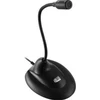
A professional dynamic microphone with an XLR connection requires an audio interface, which adds cost and a small learning curve. A USB microphone, the kind stocked at Goods Galore Megastore alongside the XLR options, skips that step entirely, plugging directly into a computer and asking nothing further of anyone.
Neither option is superior in the abstract. XLR scales better toward a future studio. USB scales better toward finishing a recording before dinner. Most home setups quietly prefer dinner.
The Part the Spec Sheet Leaves Out
A home recording studio microphone cannot fix a room. It can only fail to make the room worse, which turns out to be most of the job. A cardioid pattern, a reasonable stand, and a closet full of clothing behind the mic will outperform an expensive microphone pointed at a bare, reflective wall almost every time.
This is not a glamorous conclusion. It is, however, an accurate one, and accuracy tends to age better than enthusiasm.
Cost Versus Necessity: A Note on Restraint
The most expensive microphone in a catalog is rarely the correct answer for a bedroom setup. Studio-grade condenser microphones pick up detail with a precision that, in an untreated room, mostly means picking up the room itself, the hum, the echo, the upstairs footsteps.
A dynamic microphone is less sensitive by design, which sounds like a disadvantage until it is pointed at a wall that was never treated for sound in the first place. In that context, less sensitivity is not a limitation. It is the correct tool for the actual job.
The Stand Nobody Budgets For
A microphone bought without a proper stand or shock mount tends to transmit every tap of a desk and every footstep across a floor directly into the recording. This is discovered, reliably, after the fact, never before.
A basic boom arm with an isolating shock mount solves this for a modest cost, and it solves it permanently, unlike an equalizer setting that has to be adjusted after the fact for a problem that should never have been recorded to begin with.
A Closing Note on Expectations
Nobody's bedroom will sound like a mastering suite, and pretending otherwise wastes money that could go toward a better stand or a second mic for a co-host. The goal is not perfection. The goal is a clean, consistent signal that doesn't call attention to the room it was recorded in.
Most listeners forgive a modest recording setup. They rarely forgive one that's inconsistent from episode to episode, which is the actual problem worth solving before anything else.
Frequently Asked Questions
What is a cardioid polar pattern?
Cardioid describes a microphone's pickup shape, focused on sound from the front while rejecting noise from the sides and rear. It suits a single speaker in a room that isn't acoustically treated.
Is a USB microphone good enough for professional recording?
For podcasting, voiceover, and most home content work, yes. USB microphones connect directly to a computer with no additional equipment, trading some flexibility for genuine simplicity.
Do I need an audio interface for an XLR microphone?
Yes. XLR microphones require an audio interface to convert the signal for a computer, which adds cost and setup steps that USB microphones avoid entirely.
Does room treatment matter more than the microphone itself?
Often, yes. A modest microphone in a well-treated or naturally absorbent room, like one with soft furnishings and closets, will usually outperform a premium microphone in a bare, echo-heavy space.
What stand or mount should I pair with a dynamic microphone?
A basic desktop or boom arm stand with a simple shock mount is sufficient for most home setups, reducing handling noise and vibration without adding real cost or complexity.